
Yatadera: Jizō, Hydrangeas and the Hillside Hall
Visit the hillside home of Yata Jizō for its great hall and stone figures; return in a confirmed season for the hydrangeas.
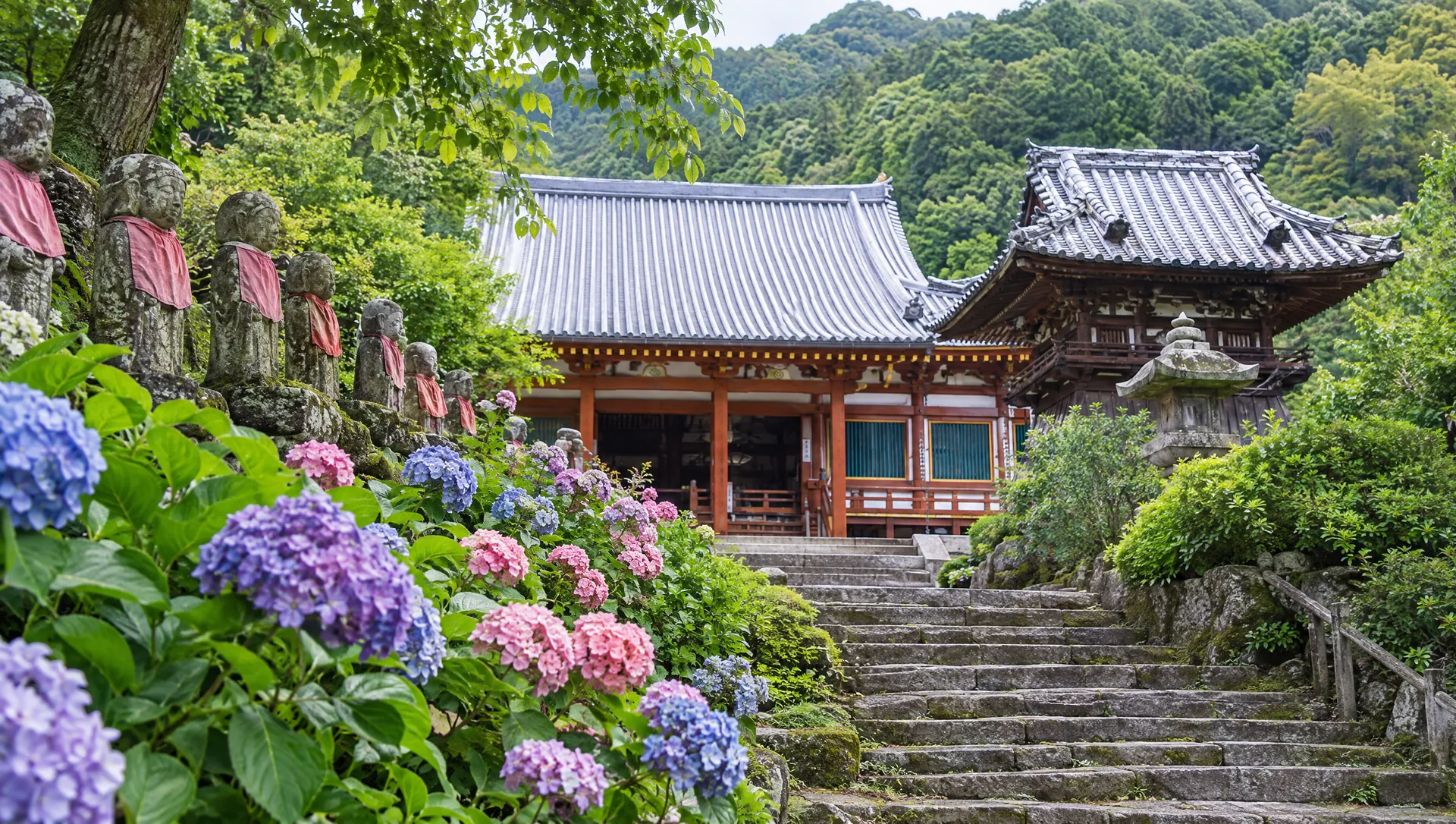 AI-generated visual study · not a documentary photograph
Discover Yatadera: Jizō, Hydrangeas and the Hillside Hall
Yatadera is the familiar name of Kongōsen-ji, a temple complex on the eastern side of the Yata Hills. Its foundation is traditionally associated with Emperor Tenmu and the monk Chitsū, though the city heritage account and prefectural interpretation give different seventh-century years. What visitors can see now is not a single untouched Nara-period building: the Jizō devotion grew in the early ninth century, the complex suffered later destruction, and the great hall preserves older elements alongside substantial Edo-period and modern repairs. In June the same precinct becomes a hydrangea destination, but the prayer hall, stone figures and hill landscape deserve attention outside flower season too.
Why Yata Jizō matters
The temple's story says the monk Manmai and the courtier Ono no Takamura encountered Jizō in the world of the dead and that the figure was subsequently installed here. This is a religious tradition, not a documented travel episode. Jizō is revered for accompanying and helping beings through difficult realms; Yatadera became an important centre of that faith. Nara Prefecture identifies the principal standing wooden Jizō as an Important Cultural Property. The temple's other statues and illustrated legends give the precinct a richer history than the flower photographs alone suggest, although possession of a treasure does not mean it is normally visible to visitors.
Read the architecture from outside the main hall
Yamato Koriyama City describes the seven-bay main hall's hipped roof, tile covering, front porch and encircling veranda. Its account says some structural pieces may date to the Muromachi period, records a major repair in 1712 and notes extensive dismantling repairs from 1994 to 2000. The hall is a prefecturally designated building, but exterior viewing and entry to its inner sanctuary are different permissions. In the 2026 flower season, the temple's Nenbutsuin subtemple announced a separately priced main-hall special viewing from 1 to 30 June; that does not establish ordinary interior access in October or a 2027 timetable.
Follow stone figures beyond the blossoms
The prefecture identifies an eighty-eight-site stone-Buddha route behind the main hall, inspired by the Shikoku pilgrimage. The regional tourism guide also points out the Miso-namé Jizō, whose mouth is traditionally touched with homemade miso in a wish for good flavour. These are devotional places, not props for a staged visitor activity. Paths rise through a hillside precinct; ask the temple which route is open and suitable for your shoes and mobility, particularly after rain. Do not assume the entire stone route is step-free or lit for an evening walk.
Treat the hydrangeas as a dated season
The temple subtemple and prefectural accounts describe roughly sixty kinds and around 10,000 hydrangea plants. The most recent operator notice found for this check was for 30 May–30 June 2026, with 08:30–17:00 access and a seasonal entry of ¥700 for adults and ¥300 for primary-school children; its separate main-hall special viewing was ¥500. That season has ended. The prefectural visitor bureau lists ordinary admission as free, but its general 08:30–17:00 and flower-season rates should be checked again for the next visit. Weather can shift bloom timing, and no next-year event, special opening or bloom is promised here.
Ask Nenbutsuin before planning a hands-on session
Nenbutsuin is one subtemple within the Yatadera complex, not a second hydrangea garden. Its current site offers shakyo, copying the Heart Sutra, with paper and writing tools available and a listed ¥1,000 offering. It says visits can be accepted from time to time, but the priest may be absent, so reserve or enquire first. Shabutsu, tracing a Buddhist image, is separately listed at ¥1,000, while some brush supplies may need to be bought. These are religious activities arranged with Nenbutsuin; neither is a guaranteed walk-in programme, an English-led lesson, or included in the wider temple's seasonal admission.
Use the current bus route, not an old fare
Nara Kotsu ran a weekend-only special bus between Kintetsu Koriyama and Yatadera-mae on six days in June 2026. That notice gave ¥440 one-way for adults and said the temporary stop lay about 250 metres before the regular stop. The service has ended; it must not appear as a year-round connection. The operator directs other visits to route 71 or 72 and Yokoyamaguchi, followed by a roughly twenty-minute adult walk according to Nenbutsuin. Nenbutsuin's own page still quotes an older ¥380 fare for a direct bus, so use the bus operator's live journey planner for your date, stop and return. The city's Kingyo Taxi includes a Yatadera stop but is a registered, eligibility-limited service, not a general tourist shuttle.
What to look for
Important Cultural Property Jizō and a layered main hall
Stone-Buddha pilgrimage path and hillside setting
Around 10,000 hydrangeas in a separately announced season
Book-ahead sutra copying at the Nenbutsuin subtemple
Photo notes
MyNara has no rights-cleared photograph of Yatadera, its flowers, images, worshippers or subtemple. Tourism-bureau and temple images are research references only. Ask the relevant temple office before photographing inside halls, people at prayer, rituals or activities, and obtain explicit rights before editorial or commercial reuse.
SEASONAL CALENDAR
Events connected with Yatadera: Jizō, Hydrangeas and the Hillside Hall
These records are shared with MyNara’s event calendar, so dates and notices have one source. Recurring patterns are not confirmed dated editions; check the organizer’s latest guidance.
Yatadera Hydrangea Festival
Yatadera's hydrangea season draws visitors to a hillside garden of around 60 varieties and roughly 10,000 plants. The temple's 2026 notice places the festival from late May through June, with peak bloom usually in mid-to-late June; opening dates, entry fees, special hall access and transport change each year. Mushinan is a separate reservation-only tea stop in the Yatadera area; it is linked here as a nearby itinerary option, not as a festival venue or participant. Confirm current arrangements with both operators before travelling.
Check organizer informationMake a day of it
Explore guides close to this map point, then check the actual route before travelling. Distances below are straight lines, not walking distances or travel times; map points may not be entrances.
Sources & editorial status
Original MyNara draft based on the linked sources. Sources reviewed 19 October 2026. Opening arrangements, prices and offers may change; use the operator's current information before travelling.
- Official Nara Travel Guide — temple identity and approximate map point
- Nara Prefecture — Jizō, hydrangeas and eighty-eight stone figures
- Yamato Koriyama City — foundation traditions and subsequent history
- Yamato Koriyama City — designated main hall and repairs
- Nara Visitors Bureau — ordinary hours, seasonal fee and temple features
- Yatadera Nenbutsuin — dated 2026 flower programme and special entry
- Yatadera Nenbutsuin — shakyo, shabutsu and year-round access guidance
- Nara Kotsu — dated 2026 festival bus, fare and normal Yokoyamaguchi alternative
- Yamato Koriyama City — registered Kingyo Taxi eligibility
- Visit Nara seasonal hydrangea candidate — same precinct, not another year-round destination