Dadaoshi: Hasedera's Demon-Dismissal Fire Rite
Three vividly costumed demons and long flaming torches bring Hasedera's week-long Shunie observance to a dramatic close each February 14.
 Verified site photographs are being prepared.
Discover Dadaoshi: Hasedera's Demon-Dismissal Fire Rite
Dadaoshi is the climactic rite of Hasedera's February Shunie, a period of prayer and repentance. The temple's account connects the ritual with a sacred seal associated with its founder Tokudo Shonin and with the expulsion of misfortune. The demons are not a folkloric show detached from the temple: their appearance follows Buddhist rites in the Main Hall, and the fiery procession expresses the ceremony's protective purpose. The event is an intense religious gathering in a historic mountain temple, with crowd and fire-safety rules shaping what visitors can see.
Follow the sequence, not only the flames
Hasedera describes Dadaoshi as the final rite of its Shunie observance. A Buddhist service takes place in the Main Hall before three demons—red, blue and green—appear. Monks and participants drive them away with large torches, after which the demons circle outside. The temple's official page gives a usual public programme of 16:00–18:30 and says the torch procession begins around 17:30; exact timing can vary by year and crowd conditions.
A protective seal, a temple legend and several possible name origins
Hasedera's temple tradition says founder Tokudo Shonin received the seal from Enma, ruler of the underworld, and brought it back to the human world. The seal marks the protective go-o-fuda talisman and, for those taking part in the optional inner-stage rite, is pressed to the forehead. The temple also records several explanations for the word 'dadaoshi'—including the seal-pressing rite and the driving out of evil spirits—and does not present one etymology as certain. Keep that distinction between a devotional temple account and a settled linguistic origin.
Follow the service from repentance to the fire procession
The temple's explanation places the demon-driving rite at the end of a seven-day Shunie, held from 8 to 14 February. It describes a repentance rite before the Main Hall's Eleven-Headed Kannon, presentation of sacred objects, the main service and a forehead-blessing rite. Conch shells and drums signal three masked demons—red, blue and green—who are driven from the sanctuary by monks holding sacred rods and stamped talismans. Outside, participants carry large torches around the hall. Hasedera's older detailed account describes them as about 4.5 metres long and 120 kilograms; the next year's practical programme takes precedence if it changes.
Know which participation costs extra
The temple's event page lists the go-o-fuda at ¥3,000 and describes an optional inner-stage participation that includes a direct seal blessing to the forehead and a close view of the demons and torches. This is a separate devotional option, not the price for ordinary viewing. Hasedera's standard entry fee is currently listed as ¥500 for adults and middle/high-school students and ¥250 for primary-school children; verify both the regular admission and any event arrangement for the next ceremony.
Reach Hasedera and prepare for the stairway
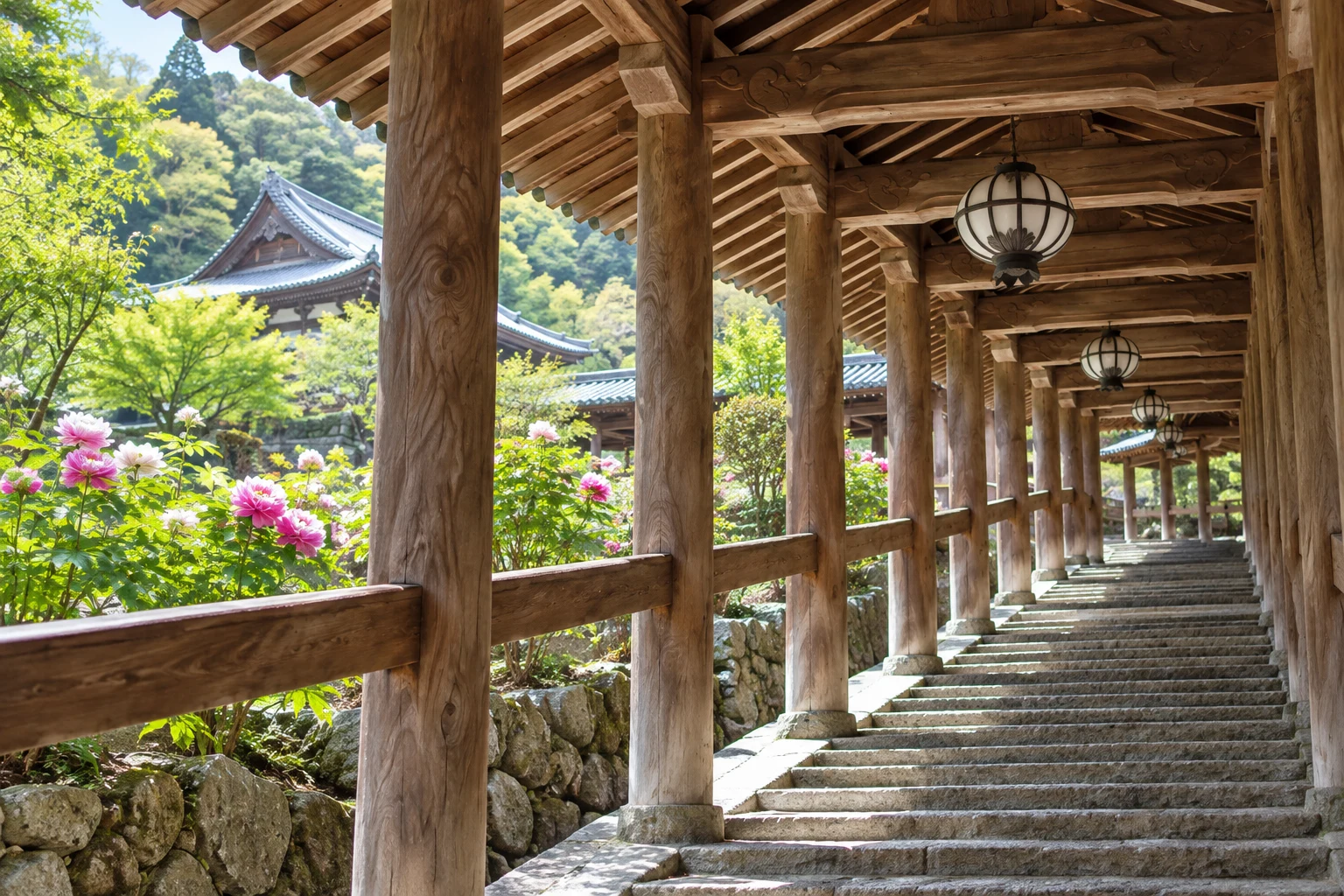
The Official Nara Travel Guide estimates a 15-minute walk from Kintetsu Hasedera Station to the temple. Hasedera sits on a wooded slope, and its long covered staircase is part of the approach through the grounds. The temple offers a limited internal shuttle for people who have difficulty walking up to the Main Hall, subject to availability and event operations; ask staff about access before the busy festival evening. Wear warm layers for a February outdoor wait.
Use the temple's multilingual explanation and observe fire rules
Hasedera provides an official explanation of Dadaoshi in English, Korean, Traditional Chinese and Simplified Chinese. The temple describes the torches in its historical account as roughly 4.5 metres long and 120 kilograms; expect significant heat, smoke, sparks and crowd-control barriers. Stay behind barriers, keep children close, do not touch flames or collect burning material, and follow temple and fire-safety staff. Tripods, monopods and ladders are prohibited throughout the grounds. Check the current event notice for any added restrictions.
What to look for
A distinctive annual rite at the close of Hasedera's February Shunie
Three demons, protective talisman ritual and large torches
A chance to see a major Buddhist observance in a mountain temple setting
Photo notes
Hasedera prohibits tripods, monopods and ladders across the temple grounds. No blanket commercial image-use permission was found. Keep devices and arms behind barriers, do not obstruct the crowd, respect any additional restrictions announced for the ceremony, and obtain written permission before reusing temple or tourism-site images.
Make a day of it
Explore guides close to this map point, then check the actual route before travelling. Distances below are straight lines, not walking distances or travel times; map points may not be entrances.
Sources & editorial status
Original MyNara draft based on the linked sources. Sources reviewed 20 October 2026. Opening arrangements, prices and offers may change; use the operator's current information before travelling.
- Hasedera — Dadaoshi rite, normal schedule and go-o-fuda participation
- Hasedera — current entry fees, hours, access shuttle and photography restrictions
- Official Nara Travel Guide — E02015 event overview, timing and station access
- Hasedera — detailed Dadaoshi sequence, firebrand scale and multiple name-origin explanations
- Hasedera — multilingual event explanation and image-use request page
- Hasedera — request process for using temple-owned images