
Nigatsu-do Hall
Visit an active ritual hall above the Great Buddha precinct and understand the Shuni-e repentance behind its famous March torches.
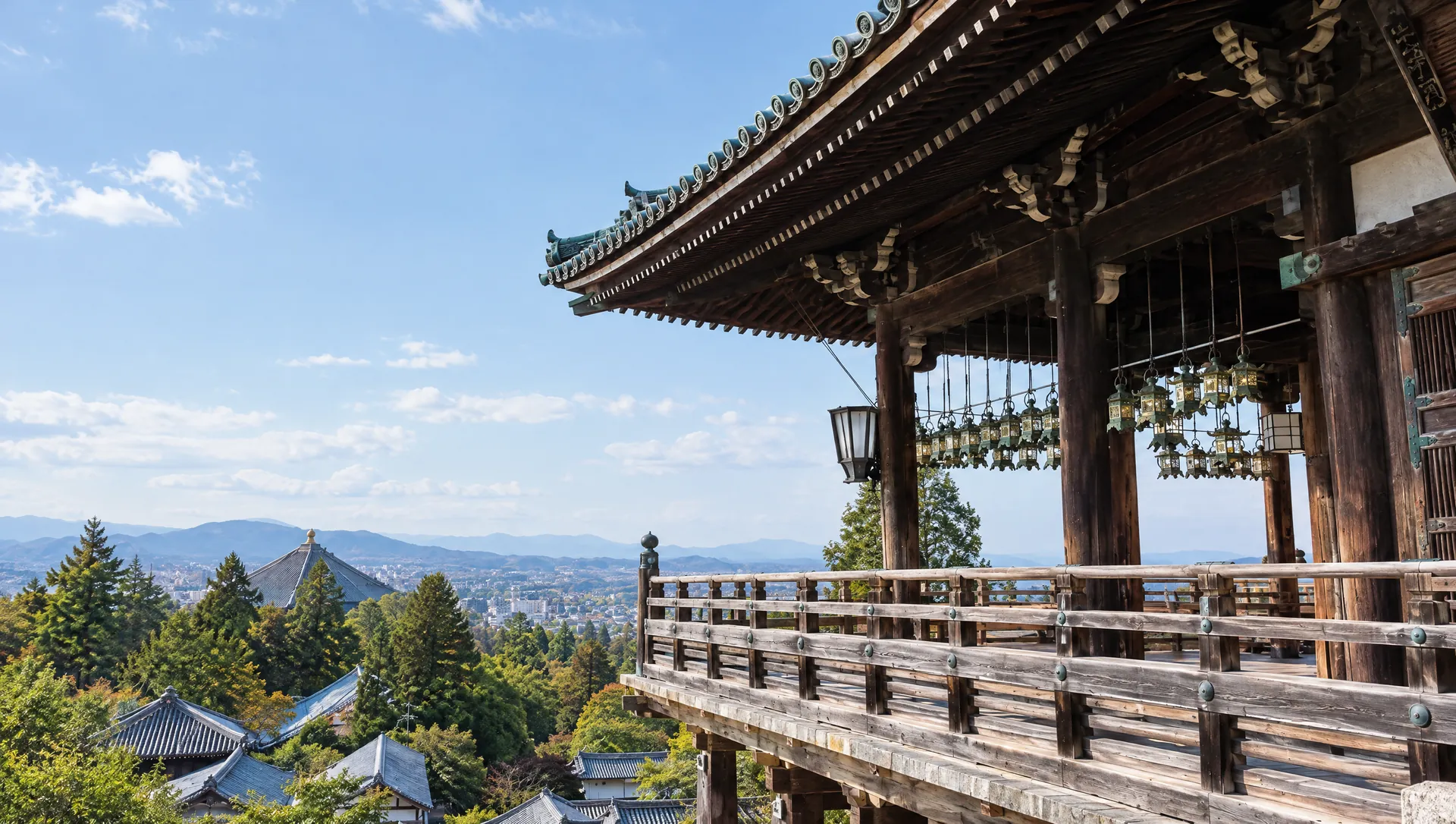 AI-generated visual study · not a documentary photograph
Discover Nigatsu-do Hall
Nigatsu-do is a working hall within the Todai-ji precinct, not simply a viewpoint above the Great Buddha Hall. Its name refers to the second lunar month, when the Shuni-e ceremony was once held; it now runs from 1–14 March. The rite is formally an Eleven-Faced Repentance before the principal image and has continued since 752. A fire during the ceremony destroyed the earlier hall in 1667; the present National Treasure was completed in 1669. The hall is open for worship around the clock, but ceremony controls, night-time quiet and strict interior photography rules shape a respectful visit.
A hall shaped by Shuni-e
Todai-ji says its monk Jitchu began Shuni-e in 752. Its formal name, Juichimen Keka, describes repentance before the Eleven-Faced Kannon for the wrongs people commit and prayer for well-being in the coming year. The current rite runs for fourteen days from 1 March. Shuni-e continued even when much of the wider temple precinct had been lost, which helps explain why this hall is a place of living worship rather than a stage built around an annual spectacle.
Understand the torches and sacred water
The large torches, or Otaimatsu, are carried as light for the monks as they ascend to the hall during the rite; they are one part of the observance, not the ceremony's whole purpose. In the night of 12 March, monks draw sacred water from the Wakasai well to offer to Kannon. The temple publishes a new visitor plan each year because crowd capacity, routes and access restrictions vary. In its 2026 notice, there were no reservations or place-holding, entry closed once safe capacity was reached, and the approach was restricted during and around the torch times. Read the next annual notice before making a March visit plan.
Read the hall's reconstruction in its layout
Todai-ji's account says the fire of 1667 began inside the hall during Shuni-e, and the present building was completed in 1669. The inner sanctuary, outer worship area and railed terrace reflect the needs of its long ritual life. Its position above the eastern side of the precinct creates a broad view across Nara, but worshippers and monthly pilgrims use the same structure. Observe quietly and leave space around the railings and entrances.
Choose an approach and allow for the climb
From the Great Buddha Hall, continue east through the precinct and follow Todai-ji's map and signs. The official tourism guide describes two final approaches: cobbled steps bordered by stone walls from the front, or a covered wooden stairway from behind. From Kintetsu Nara Station it lists about sixteen minutes on foot, but the last section is uphill. Wheelchair users cannot reach the upper hall because stairs cannot be avoided; do not plan the terrace as a step-free stop.
Know the monthly service and open hours
Todai-ji states that Nigatsu-do is open for worship 24 hours, subject to ceremonies and restricted areas; keep quiet at night. A service is held on the 18th of each month, beginning at 8:00 from April through October and 8:30 from November through March, and lasting about two hours. Visitors may listen from the west-side gallery, but space is limited and entry is not guaranteed. The hall itself has no ordinary timed ticket listed by the temple; this is separate from paid admission to the Great Buddha Hall and other Todai-ji interiors.
What to look for
Hillside terrace over Nara
The Shuni-e ritual hall
An uphill walk through Todai-ji's precinct
Photo notes
Todai-ji prohibits photography, sketching and flashlight use inside Nigatsu-do. Its Japanese visitor notice also prohibits tripods around the hall and on the terrace. Respect worshippers and the current signs.
SEASONAL CALENDAR
Events connected with Nigatsu-do Hall
These records are shared with MyNara’s event calendar, so dates and notices have one source. Recurring patterns are not confirmed dated editions; check the organizer’s latest guidance.
Nigatsu-dō Setsubun (2027)
Tōdai-ji's Nigatsu-dō is scheduled to hold its Setsubun rites on February 3, 2027. The temple's annual programme and the Nara City Tourism Association's dated notice list the burning of old talismans around 10:00, bean-throwing after the 14:00 service, and a star-protection rite at 18:00. The public bean distribution is from a temporary stage in the plaza in front of Hokke-dō; crowd limits may apply. The published schedule can change, and no separate event fee or reservation procedure is stated. Check Tōdai-ji's latest notice before travelling.
- Time
- Old-talisman burning around 10:00; bean-throwing after the 14:00 service; star rite at 18:00
- Admission
- No event-specific fee is stated in the checked notices; confirm any separate admission arrangements with Tōdai-ji.
- Booking
- No reservation procedure is stated. The temple warns that crowd capacity can limit access to the bean-throwing area; follow current on-site directions.
Tōdai-ji Shuni-e and Otaimatsu (2027)
Tōdai-ji's 1,276th Shuni-e is listed for March 1–14, 2027 at Nigatsu-dō. The Nara City Tourism Association's current notice says Otaimatsu viewing is generally permitted March 1–14 except March 12, but viewing areas have capacity limits: once the main lawn and plaza fill, visitors are directed to a second viewing area, and viewing ends when that area also fills. On March 12, visitors should avoid attending because severe crowding is expected; the second area can close when full and listening inside the hall is limited to authorised people. The temple says schedules and restrictions can change. No booking or event fee is stated in the checked notices; verify the latest temple guidance before travel. Do not photograph or record where the temple prohibits it.
- Admission
- No event-specific fee is stated in the checked notices; confirm any separate admission arrangements with Tōdai-ji.
- Booking
- No reservation process is stated. Viewing is capacity controlled and may stop when both designated areas fill; on March 12 the temple asks people to avoid attendance and limits hall listening to authorised persons.
Make a day of it
Explore guides close to this map point, then check the actual route before travelling. Distances below are straight lines, not walking distances or travel times; map points may not be entrances.
Sources & editorial status
Original MyNara draft based on the linked sources. Sources reviewed 20 October 2026. Opening arrangements, prices and offers may change; use the operator's current information before travelling.
- Todai-ji Nigatsu-do guide
- Todai-ji Japanese visitor notice and photography rules
- Nara Prefecture listing
- Todai-ji Shuni-e history and ritual calendar
- Todai-ji Otaimatsu times and visitor guidance
- Todai-ji 2026 ceremony access and crowd-control notice
- Todai-ji monthly service, hours and photography rules
- Todai-ji precinct map and wheelchair limitations