Chōshimaru Kofun: A Horse-Keeper Legend in the Rice Fields
See a partly reduced round mound and the clay-horse clue behind a tradition about Prince Shōtoku's attendant.
 Verified site photographs are being prepared.
Discover Chōshimaru Kofun: A Horse-Keeper Legend in the Rice Fields
About 100 metres south of Komazuka is a smaller round mound surrounded by a worked landscape. Its name recalls Chōshimaru or Chōshimaro, remembered as the keeper of Prince Shōtoku's black horse. The physical evidence points to a kofun built around the fifth century, earlier than the prince's lifetime, while a delicately modelled clay horse head found nearby adds a striking later archaeological detail. The guide is an invitation to look carefully from outside the protected mound and distinguish a cherished regional legend from excavation results. It is not a place to enter, and the location is best folded into a short walk around Ikaruga's eastern archaeological sites.
Recognise what survives in the landscape
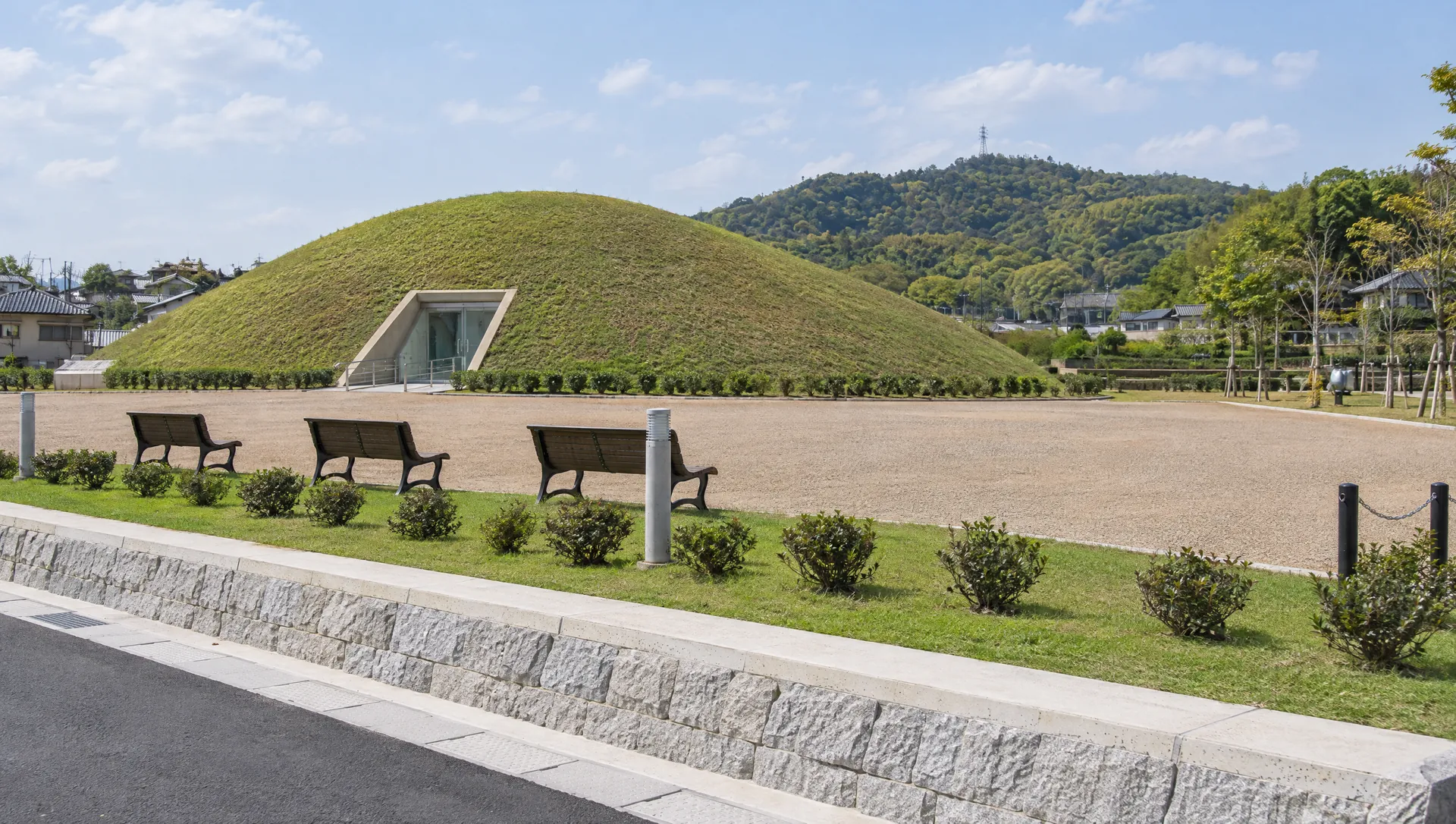
Ikaruga Town describes the visible mound as about 14 metres across, its lower edges cut back by later agricultural use. The prefectural heritage record says excavation around it suggests an original round mound in the 30-metre class, and the local tourism centre places its construction around the middle of the fifth century from haniwa evidence. A small hill in a field is therefore a surviving remnant, not the complete original shape. Nearby Komazuka is a larger keyhole mound, approximately 100 metres north. Their earthworks are related by landscape and legend but are not one archaeological feature.
A clay horse head is evidence, but not proof of a name
A town excavation in fiscal 2000 near the north side recovered the head of a carefully formed clay horse with harness details. The local tourism description also notes cylindrical and equipment-shaped haniwa. A January 2026 Ikaruga Town newsletter dates the clay horse to around the seventh century, later than the mound's estimated fifth-century construction. This distinction matters: the find records later activity near the mound, but it does not identify a particular animal or person buried here. The model helps explain why visitors remember the horse story without confirming the Chōshimaru tradition.
Treat the attendant's grave as a legend
Prefectural and local guides retell the story of Chōshimaru, a retainer who cared for Kurokoma, Prince Shōtoku's celebrated horse. The mound was already centuries old if the fifth-century archaeological date is correct, so the naming is a later cultural association rather than a secure occupant identification. The prefecture records Chōshimaru-zuka in an Edo-period illustrated guide, evidence that the legend was firmly attached to the site by that time. Some biographical details of the attendant in traditional texts differ; the article does not turn them into verified history.
Observe both protected mounds from outside
The Hōryūji i Center explicitly prohibits entry onto Chōshimaru Kofun, just as it does for Komazuka. It says visitors can see both mounds together from a southern position, but that does not authorize crossing paddy fields or fences for a photograph. Chōshimaru is at Tōfukuji 1-5. The local guide estimates about 22 minutes on foot from JR Hōryūji Station or around five minutes on foot after a bus to Hōkiji-guchi from JR Ōji or Kintetsu Tsutsui. Routes and agricultural access can change; check current transport and stay on public paths.
Connect the mounds to an older Ikaruga
Ikaruga Town designated both Chōshimaru and Komazuka as town Historic Sites on 8 October 1992. Komazuka's archaeological date is the later fourth century and Chōshimaru is generally placed in the fifth, whereas the famed Fujinoki burial belongs to the later sixth century. This sequence gives a visitor a more varied view of Ikaruga than a single Prince Shōtoku-era story. The town has not published a staffed schedule, ticket, open chamber or dedicated visitor amenities for this mound in the reviewed material; the value is the interpretive roadside stop.
What to look for
Small surviving circular mound and older field landscape
Excavated clay horse head with harness details
Two-mound view toward nearby Komazuka
Photo notes
No site or excavation photograph is licensed to MyNara. Photograph from a lawful safe outside position without entering fields, protected mound or residents' space. The local no-entry note remains in force even for a better angle; ask the town about any special research or commercial filming arrangements.
Make a day of it
Explore guides close to this map point, then check the actual route before travelling. Distances below are straight lines, not walking distances or travel times; map points may not be entrances.
Sources & editorial status
Original MyNara draft based on the linked sources. Sources reviewed 19 October 2026. Opening arrangements, prices and offers may change; use the operator's current information before travelling.
- Ikaruga Town — clay horse-head find, mound size and town designation
- Ikaruga Town January 2026 newsletter — clay horse-head dating
- Nara Prefecture heritage database — original-size estimate and Chōshimaru tradition
- Hōryūji i Center — no-entry rule, travel access and approximate map marker
- Nara Prefecture walking route — nearby archaeological landscape