
Yagyu Yasaka Shrine (Former Shinomiya Daimyojin)
A village shrine once called Shinomiya Daimyojin, woven into Yagyu's local worship, Edo-period history and annual community rites.
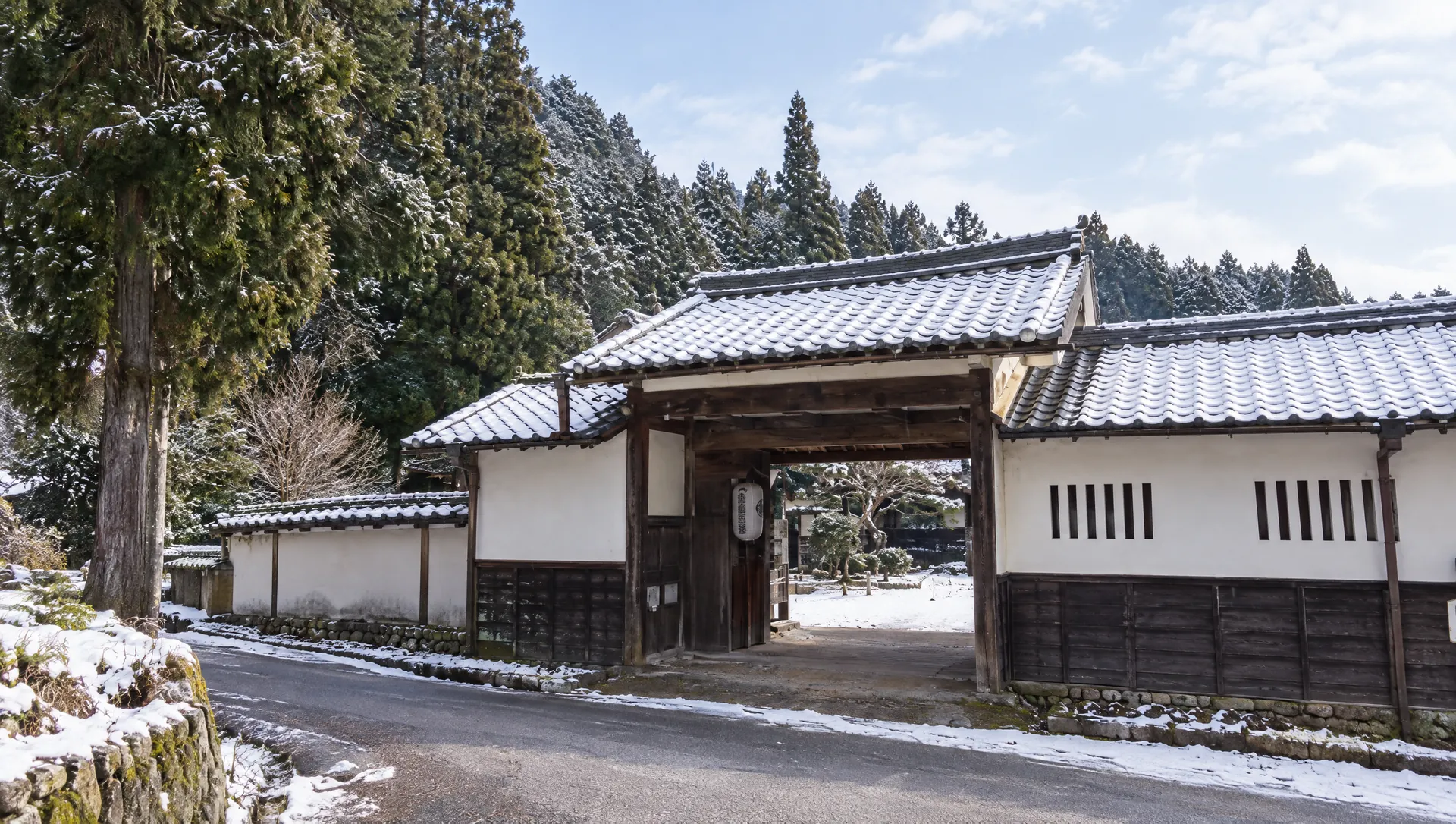 AI-generated visual study · not a documentary photograph
Discover Yagyu Yasaka Shrine (Former Shinomiya Daimyojin)
Yagyu Yasaka Shrine stands on a village route that links the former domain landscape with places still used by the community. The Yagyu Tourism Association says it was formerly called Shinomiya Daimyojin and enshrined Himegami, the deity of Kasuga Taisha's fourth sanctuary. In 1654, Yagyu Munefuyu invited a divided spirit of Susanoo from the Yasaka Shrine in Obo, built a shrine hall and changed the site's name. The association also says the worship hall was transferred from the Noh stage at Amano-Ishitate Shrine; it does not give a transfer date. The shrine remains a place of worship, not a staged attraction, so visitors should keep to public paths and respect the residents and worshippers around it.
Formerly Shinomiya Daimyojin
The Yagyu Tourism Association identifies Shinomiya Daimyojin as the former name of today's Yagyu Yasaka Shrine and says the earlier shrine enshrined Himegami, associated with Kasuga Taisha's fourth sanctuary.
A documented change in 1654
The local association dates the change to 1654 (Jōō 3): Yagyu Munefuyu invited a divided spirit of Susanoo from the Yasaka Shrine in Obo, built the shrine hall and renamed the site. This is a recorded change in the shrine's history, not proof that worship at the location began in 1654. The Obo shrine is a separate place and should not be confused with this Yagyu precinct.
The worship hall and a neighboring shrine
The association says this shrine's worship hall was moved from the Noh stage of Amano-Ishitate Shrine, another Yagyu site. The published account does not specify when it was moved, so the connection is best treated as local historical information rather than a dated building chronology. Look from public areas and do not enter closed structures.
A living Miyaza tradition
Nara City records the Yagyu Miyaza rite as a prefecturally designated intangible folk cultural property, designated on 18 March 1986. Nara Prefecture describes an October festival maintained by the upper and lower Yagyu communities and documents three performance forms: sumo-no-mai, a paired dance styled as sumo; sasara-no-mai, accompanied by a binzasara percussion instrument; and yōgo-no-mai, a dance with fans and ritual words. These are community rites rather than a staged daily attraction. The Yagyu Tourism Association's 2026 schedule listed the shrine's festival for 12 October, with a procession from 10:30 and the dances from 11:30. Those are past, year-specific times, not a standing timetable or confirmation of public viewing and recording terms. Check the association's current annual schedule before planning around a future rite.
Walk the village route respectfully
The association includes the shrine on its roughly 3 km Yagyu history loop from Yagyu bus stop (about 60 minutes for the complete circuit, including visits to the former chief-retainer's residence and Hōtokuji). This is a suggested village walk, not a shrine-only approach time or live route guidance. The association's access page lists buses to Yagyu from JR Nara Station West Exit, stop 16, and Kintetsu Nara Station, stop 4; it gives approximate journeys of 51–56 and 44–49 minutes respectively. The association lists ¥1,110 one way, and a Nara Kotsu spring 2026 leaflet independently lists the same adult fare; that dated leaflet is not a current autumn timetable. Use Nara Kotsu's live route planner to confirm the date-specific departure, service and fare before travel. Plan the return bus before starting the walk, stay on public paths, and avoid photographing worshippers or nearby homes.
What to look for
Shinomiya Daimyojin
Local history records the shrine's former name and its connection with Himegami.
1654 reorganisation
Local history links the current shrine to Yagyu Munefuyu and Obo Yasaka Shrine.
Prefecturally designated Miyaza rite
Three distinct ritual dances are maintained by the upper and lower Yagyu communities.
Photo notes
No general photography policy was found. Respect worshippers and nearby homes, follow shrine signs and ask the local association before publication-oriented photography. No third-party image is licensed for MyNara.
Make a day of it
Explore guides close to this map point, then check the actual route before travelling. Distances below are straight lines, not walking distances or travel times; map points may not be entrances.
Sources & editorial status
Original MyNara draft based on the linked sources. Sources reviewed 24 October 2026. Opening arrangements, prices and offers may change; use the operator's current information before travelling.
- Yagyu Tourism Association — former Shinomiya Daimyojin name, 1654 history, hall tradition and walking route
- Yagyu Tourism Association — 2026 annual shrine-event listings and date-specific Yagyu Yasaka schedule
- Historical place gazetteer — Yagyu Yasaka Shrine name, address and approximate coordinate
- Nara Prefecture Tourism Bureau — Yagyu walking route through the village
- Nara Prefecture — Yagyu Miyaza annual festival and sacred dances
- Nara City — Yagyu Miyaza rite, prefectural intangible folk cultural property (designated 18 March 1986)
- Yagyu Tourism Association — bus access from JR/Kintetsu Nara; linked timetable dated 1 Apr 2024, verify current service
- Nara Kotsu — spring 2026 excursion timetable and listed adult fare of ¥1,110 to Yagyu; seasonal departures only
- Nara Kotsu — live bus timetable and route planner