Matsuo-dera: A Mountain Temple for Yakuyoke
Climb to a living mountain temple, read its 1337 main hall and distinguish free grounds from paid, seasonal image viewings.
 Verified site photographs are being prepared.
Discover Matsuo-dera: A Mountain Temple for Yakuyoke
Matsuo-dera sits on the flank of Mount Matsuo west of Ikaruga, far enough uphill that it feels different from the level Hōryū-ji approach. Its tradition links its 718 founding to Prince Toneri, who was involved in compiling the Nihon Shoki and prayed both for that work and protection during an inauspicious year. The old image of a mountain temple matters here: the surviving main hall was rebuilt in 1337 and the site still holds rituals, a large sacred stone and views over the lowlands. Entering the grounds is free, but viewing particular images and joining prayers are separate decisions with their own dates and charges. This is a place to plan slowly, not an easy extra stop attached to a Hōryū-ji ticket.
Treat the origin as a religious tradition
The temple describes Prince Toneri, son of Emperor Tenmu, founding a yakuyoke or misfortune-averting sanctuary in 718 while working on the Nihon Shoki. Its account includes a vision of the Thousand-armed Kannon and presents itself as Japan's oldest such pilgrimage site. These are the temple's founding traditions, not a precise record that every present building is eighth-century. The city's heritage register dates the large current main hall to a 1337 rebuilding and identifies it as an Important Cultural Property. Climb the steps with that difference in mind: a long-lived practice in a much later structure.
Look beyond the main hall
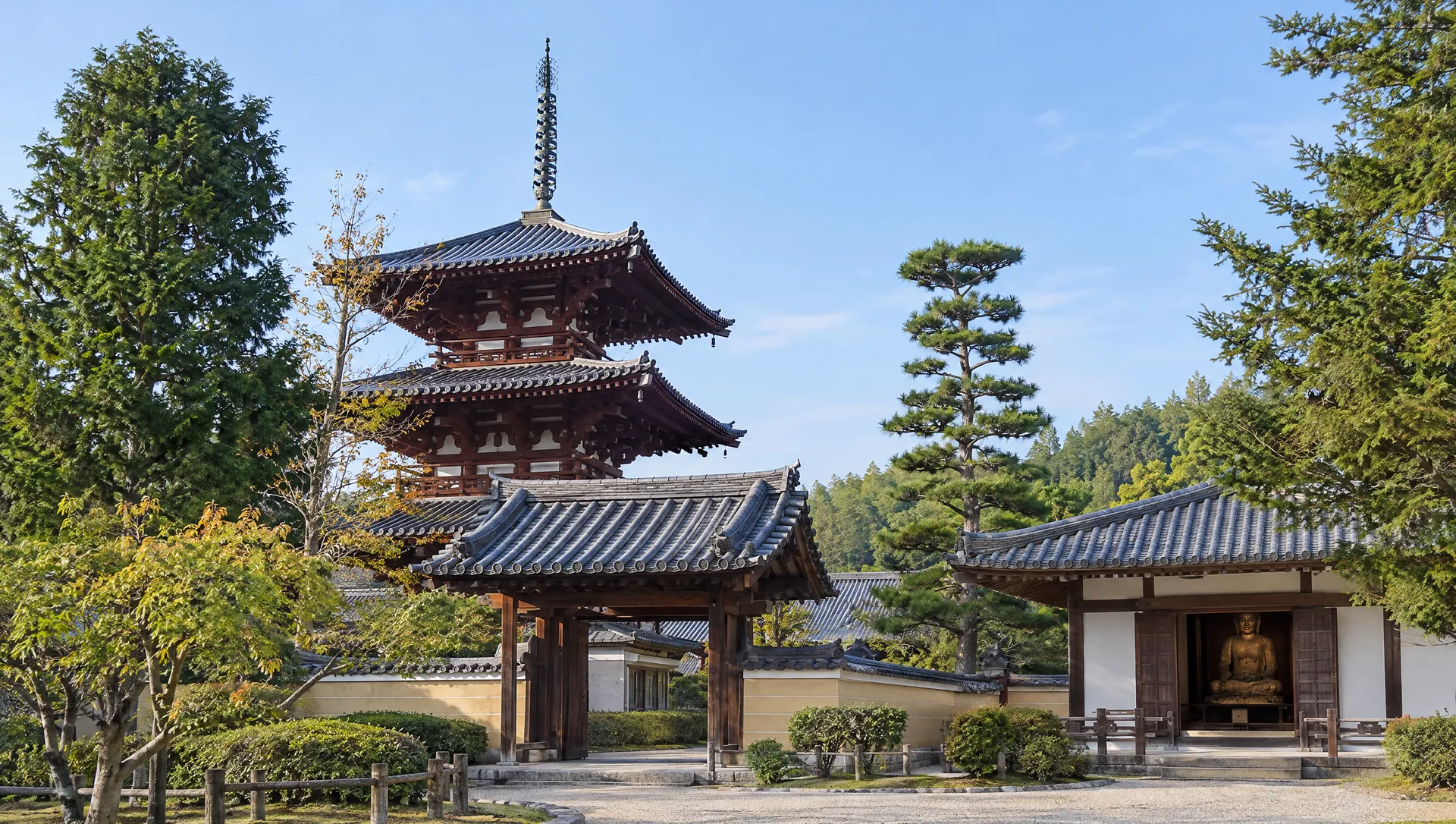
The precinct guide maps a sacred boulder behind the hall, a thirteen-storey stone tower, a three-storey pagoda, a Seven Gods hall, an ascetic's hall, shrine and flower areas. This is one compound, not a dozen separate attractions to count. The boulder also appears in the prefecture's discussion of historic illustrated guides. Roses and lilies are seasonal, so blooms cannot be promised on a particular date. Around the main hall, let current signs and ritual activity determine how close to approach objects of worship.
Separate grounds, halls and hidden-image dates
The operator calls ordinary entry to the temple grounds free and lists a 9:00–16:00 visitor window. Its 2026 event notice advertises main-hall image viewing from 20 March to 20 December, while a different dedicated admission page still carries 2025's 21 December endpoint and ¥1,000 price; verify this year's hall price and final date before travel. The Seven Gods hall is listed as open through the year with a separately posted ¥500 viewing charge. The principal Thousand-armed Kannon is a hidden image, offered for viewing on 3 November only; the 2026 notice lists 9:00–16:00 and ¥1,000. September ascetic-image access and other openings have their own windows. Free grounds never imply free or daily access to these images.
Ask about prayer or copying sutras as distinct activities
This is an active temple offering yakuyoke prayers as well as sightseeing. Its 2026 prayer notice says the first service starts at 9:00 and requests arrival by 15:45 for the last 16:00 service. Direct main-hall prayers generally do not operate on Fridays from March to December, apart from specified dates, although visiting and hall viewing can continue; check the exact day with the temple. The operator also advertises sutra copying from around mid-March to early December, 9:00–15:00, and a separate children's mountain-temple programme. Neither is an automatic walk-in multilingual product: ask the temple about fees, booking, language, age and availability before planning a dedicated experience.
Budget for the final climb
The operator gives two bus approaches: JR Yamato-Koizumi east exit toward Kintetsu Kōriyama, or the reverse route from Kintetsu Kōriyama. Get off at Matsuoderaguchi and continue approximately 2 kilometres on foot to the hillside temple. That last section is a real walk with elevation; allow time, suitable shoes and weather margin, and check a current bus timetable and return service. Driving follows Nara prefectural road 123. The temple lists two car-park areas with capacity of roughly 100 ordinary cars and ten large vehicles, but does not confirm a parking charge or a guaranteed space. Temple stairways and wooded trails may limit step-free access; ask directly if required.
What to look for
1337 main hall above Ikaruga's hills
Free temple grounds with separately charged image viewings
Sacred boulder, stone tower and living yakuyoke practice
Photo notes
Matsuo-dera states that texts, photographs and illustrations on its site are copyrighted and not reusable. It asks visitors seeking drone photography in its grounds or forest to consult the temple and limits that to qualified operators. The reviewed pages do not establish general permission for photography during worship or inside halls. Follow signs and ask staff before photographing; MyNara has no licensed temple image.
SEASONAL CALENDAR
Events connected with Matsuo-dera: A Mountain Temple for Yakuyoke
These records are shared with MyNara’s event calendar, so dates and notices have one source. Recurring patterns are not confirmed dated editions; check the organizer’s latest guidance.
Matsuo-dera Yakuyoke Kannon Special Opening (2026)
Matsuo-dera's current official notice confirms that the normally hidden principal Yakuyoke Kannon will be open in the main hall on November 3, 2026, from 09:00 to 16:00. The temple and Nara Prefecture list admission at ¥1,000; the temple says the principal image is shown on this one day each year, while the prefectural listing includes the Toneri Prince image and damaged Buddhist statue in the visit. Confirm any changes with the temple before travelling.
Check organizer informationMatsuo-dera Hatsu-uma Yakuyoke Festival (February)
Nara Prefecture identifies the February Hatsu-uma Yakuyoke Kannon festival as the best-known part of Matsuo-dera's annual February–March Yakuyoke Festival and says many worshippers attend. The temple's 2026 calendar scheduled the event from 09:00 to 16:00, with a large goma fire rite around 11:00, kagura from 10:00 to 16:00, and free zenzai for the first 500 visitors. These are the 2026 terms, not a confirmed future edition; check the current temple notice for its date, programme and visitor arrangements.
- Time
- The 2026 edition was scheduled for 09:00–16:00; goma around 11:00 and kagura 10:00–16:00.
- Admission
- The temple's 2026 calendar listed free zenzai for the first 500 visitors; it did not state a separate event admission fee.
- Booking
- The 2026 public calendar did not list advance booking. Confirm current-year visitor and crowd arrangements with the temple.
Make a day of it
Explore guides close to this map point, then check the actual route before travelling. Distances below are straight lines, not walking distances or travel times; map points may not be entrances.
Sources & editorial status
Original MyNara draft based on the linked sources. Sources reviewed 20 October 2026. Opening arrangements, prices and offers may change; use the operator's current information before travelling.
- Matsuo-dera — current grounds hours, free entry, bus walk and parking
- Matsuo-dera — 2026 principal-image opening and main-hall season
- Matsuo-dera — hall-by-hall viewing calendar
- Matsuo-dera — 2026 Friday prayer and special-hall conditions
- Matsuo-dera — sutra copying and child programme
- Yamato-Kōriyama City — 1337 main-hall heritage record
- Official Nara Travel Guide — A00943 directory identity