
Hōki-ji: Ikaruga's Original Three-Storey Pagoda
See Japan's oldest surviving three-storey pagoda and understand how it belongs to the Hōryū-ji World Heritage landscape.
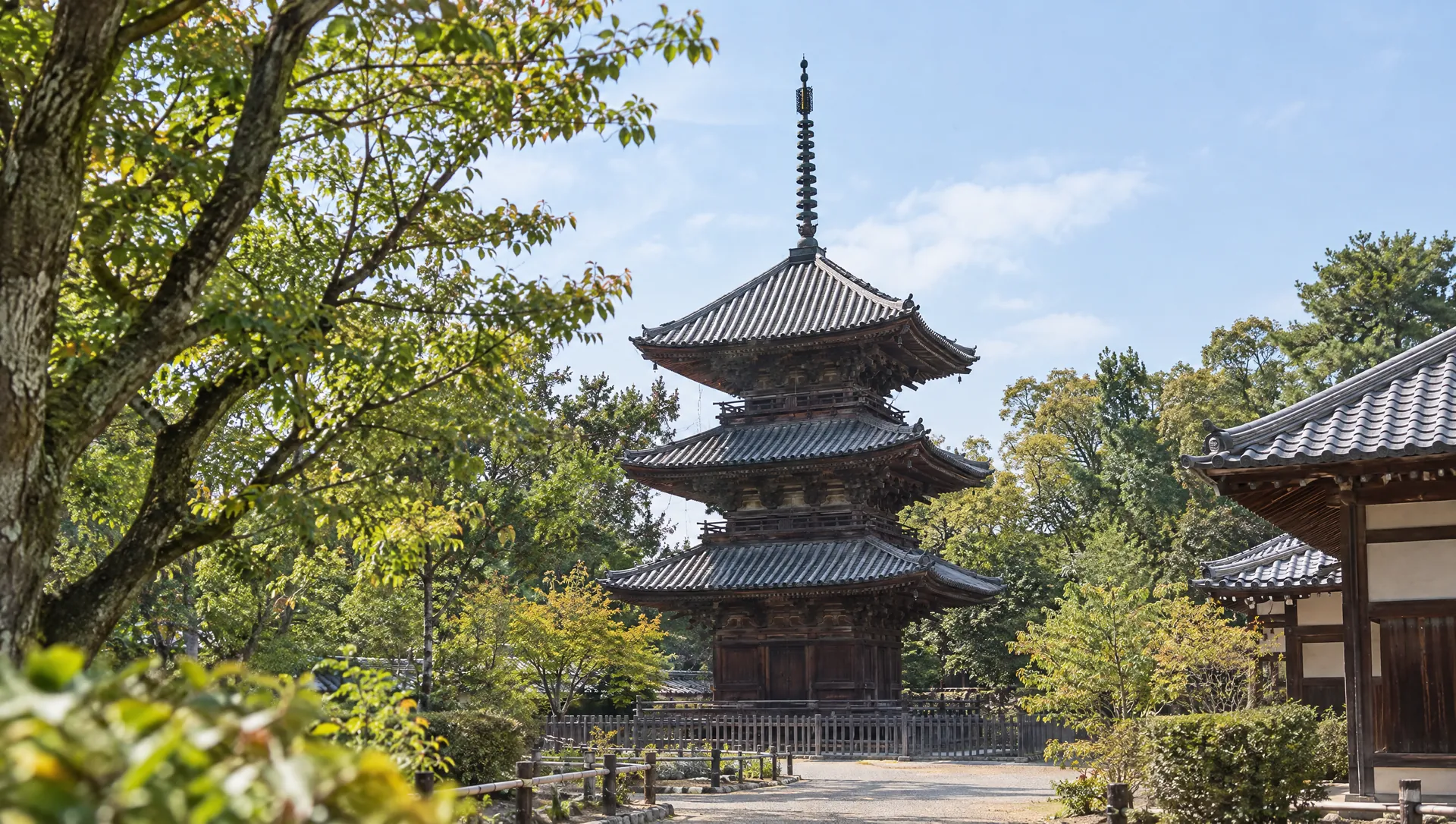 AI-generated visual study · not a documentary photograph
Discover Hōki-ji: Ikaruga's Original Three-Storey Pagoda
Hōki-ji is a separate, smaller temple northeast of Hōryū-ji, yet its pagoda is central to the same World Heritage story. The temple traces its origin to a tradition that Prince Shōtoku's son turned the Okamoto Palace into a Buddhist temple after his father's death. Excavation and the account of the pagoda's dated finial place the building history on firmer ground: the surviving three-storey tower was completed in 706. Unlike the other halls, it is the temple's original ancient building. A visit rewards a slower look at that distinction, then at the later lecture hall and the Kannon held in a storehouse, rather than treating the pagoda as a quick roadside photograph.
Separate the founding tradition from the surviving timber
The operator recounts a tradition that Shōtoku asked his eldest son, Prince Yamashiro, to turn the Okamoto Palace into a temple. The former palace connection is a religious and historical account, while excavation indicates an earlier structure at the site. The three-storey pagoda has a more specific building date: the temple's description links its completion to a 706 inscription on the original finial. Do not read the present compound as an untouched seventh-century plan; the archaeological footprint of the old lecture hall and corridors was much larger than today's.
Look at the tower's position
The tower stands east of the main hall, reversing the more familiar Hōryū-ji Western Precinct relationship. The temple identifies it as Japan's oldest surviving three-storey pagoda and the only building here retained from the early construction phase. It was dismantled and repaired from 1972 to 1975, so what visitors see is historic fabric maintained through major conservation, not an unaltered object. The Hōryū-ji operator describes the pagoda at roughly 24 metres. Read it alongside Hōryū-ji's five-storey tower and Hōrin-ji's rebuilt three-storey tower to understand the three different histories.
Find the later hall and Eleven-faced Kannon
The existing lecture hall dates from a 1694 reconstruction rather than the first temple. The site's important wooden Eleven-faced Kannon, thought to date from the late tenth century, formerly stood in the lecture hall and is now housed in a storehouse. Its cedar core and former root-shaped rock support are details worth reading before the visit, but do not promise that the storehouse or sculpture is continuously accessible without checking that day's arrangements. Another hall was added in 1863. The site's layers therefore span far beyond a single Asuka-period monument.
Look east for autumn cosmos
Ikaruga Town's page, updated 14 September 2026, describes cosmos flowers on the east side of Hōki-ji around mid-October. They add a seasonal landscape to the pagoda visit, but bloom timing and the extent of the display vary, and the flower fields are not a temple amenity. Keep to public paths and respect growers' boundaries; do not enter planted rows or photograph local people without permission.
Choose a route that does not rely on a stale walking estimate
The operator places Hōki-ji 2.5 kilometres northeast of JR Hōryūji Station. Ikaruga's tourism centre estimates about 35 minutes on foot; the older prefectural English entry instead suggests 20 minutes from JR Yamato-Koizumi, without matching the operator's preferred station approach. Nara's tourism office lists a bus from Kintetsu Kōriyama via Hōki-ji, stopping by the temple, and a route from Ōji to Hōki-ji-guchi with a further walk. Check today's bus timetable and stop name before depending on one of these less-frequent services. Hōrin-ji is another nearby walk rather than a second ticket within this compound.
Bring cash and respect the photography ban
The operator's 1 March 2025 visitor revision sets hours at 8:30–17:00 from 22 February to 3 November and 8:30–16:30 from 4 November to 21 February, with reception ending 30 minutes earlier. Individual admission is ¥500 for adults and university/high-school students, ¥400 for junior high, and ¥300 for primary school. Groups of 30 or more pay ¥400, ¥350, ¥300 and ¥200 respectively. The operator also lists discounted rates for a disabled visitor and one attendant (two attendants for a wheelchair user): adult ¥250, junior high ¥200 and primary ¥150; group members with a disability receive half the group rate. Admission is cash-only and non-refundable. Its shared Hōryū-ji/Hōki-ji visitor rules prohibit drawing, photography and video on the grounds, along with drones, smoking and cycling through the precinct. The nearby cosmos fields are outside the temple; respect the growers' boundaries and ask before photographing people.
What to look for
A 706 three-storey pagoda surviving from the first building phase
A later lecture hall and a tenth-century Eleven-faced Kannon
World Heritage context shared with nearby Hōryū-ji
Photo notes
The Hōryū-ji operator explicitly prohibits sketching, photography and video on both Hōryū-ji and Hōki-ji grounds, as well as drone photography. Do not photograph inside this precinct. The operator says its website texts and images cannot be reproduced or repurposed; MyNara has no licensed temple or pagoda photograph.
Make a day of it
Explore guides close to this map point, then check the actual route before travelling. Distances below are straight lines, not walking distances or travel times; map points may not be entrances.
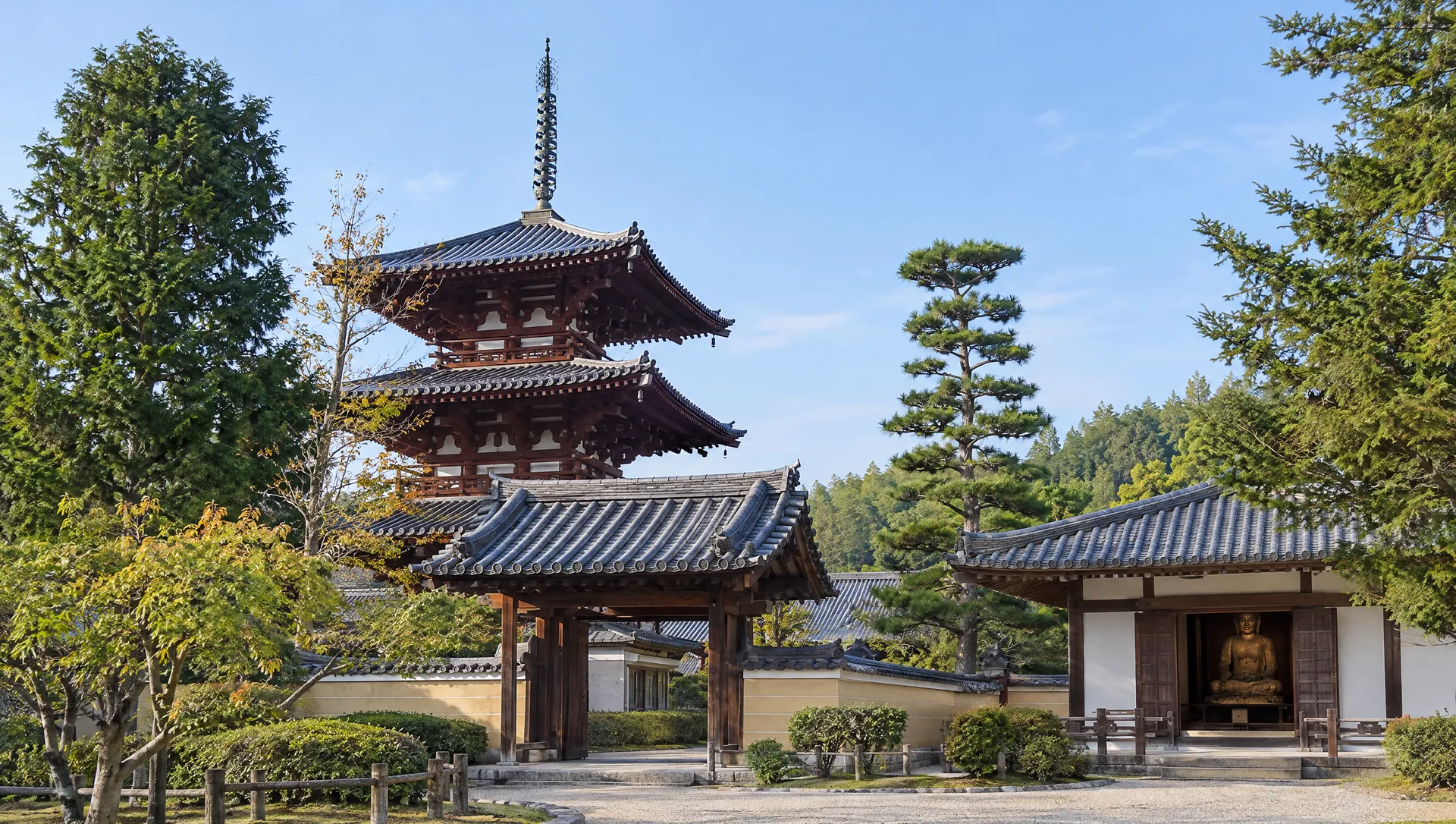
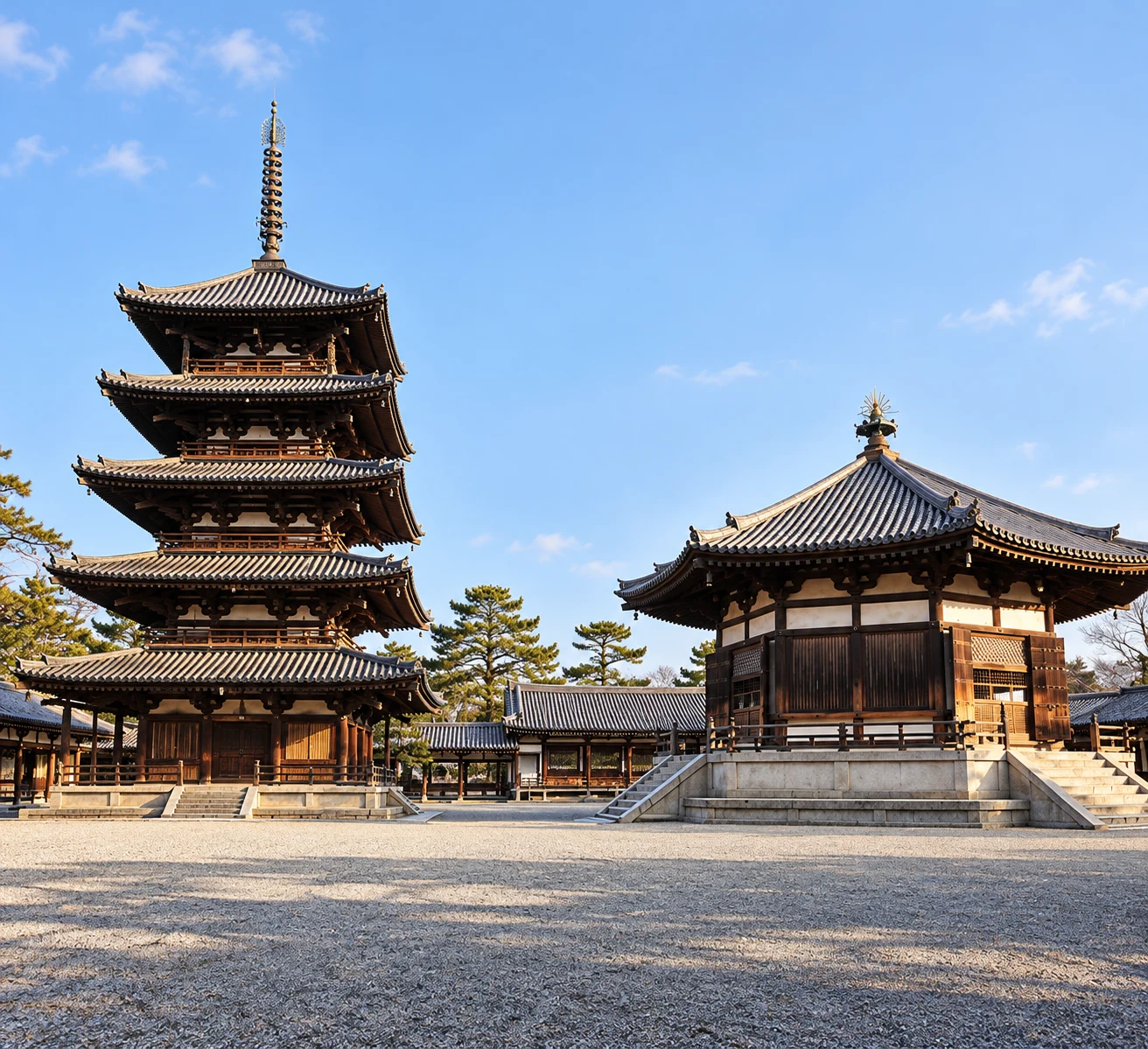
Sources & editorial status
Original MyNara draft based on the linked sources. Sources reviewed 20 October 2026. Opening arrangements, prices and offers may change; use the operator's current information before travelling.
- Hōryū-ji operator — Hōki-ji history, artwork, 2025 admission and access
- Hōryū-ji operator — rules covering Hōki-ji photography
- Nara tourism office — bus approaches and no on-site parking
- Ikaruga tourism centre — walking estimate and off-site parking
- Ikaruga Town — local founding tradition and autumn cosmos timing (updated 14 Sep 2026)
- Official Nara Travel Guide — directory identity A00508 and older hours