
Ohnoji Temple and the Miroku Cliff Carving
Stand at the temple's prayer terrace and face a Kamakura-period Miroku carved into the cliff across the river.
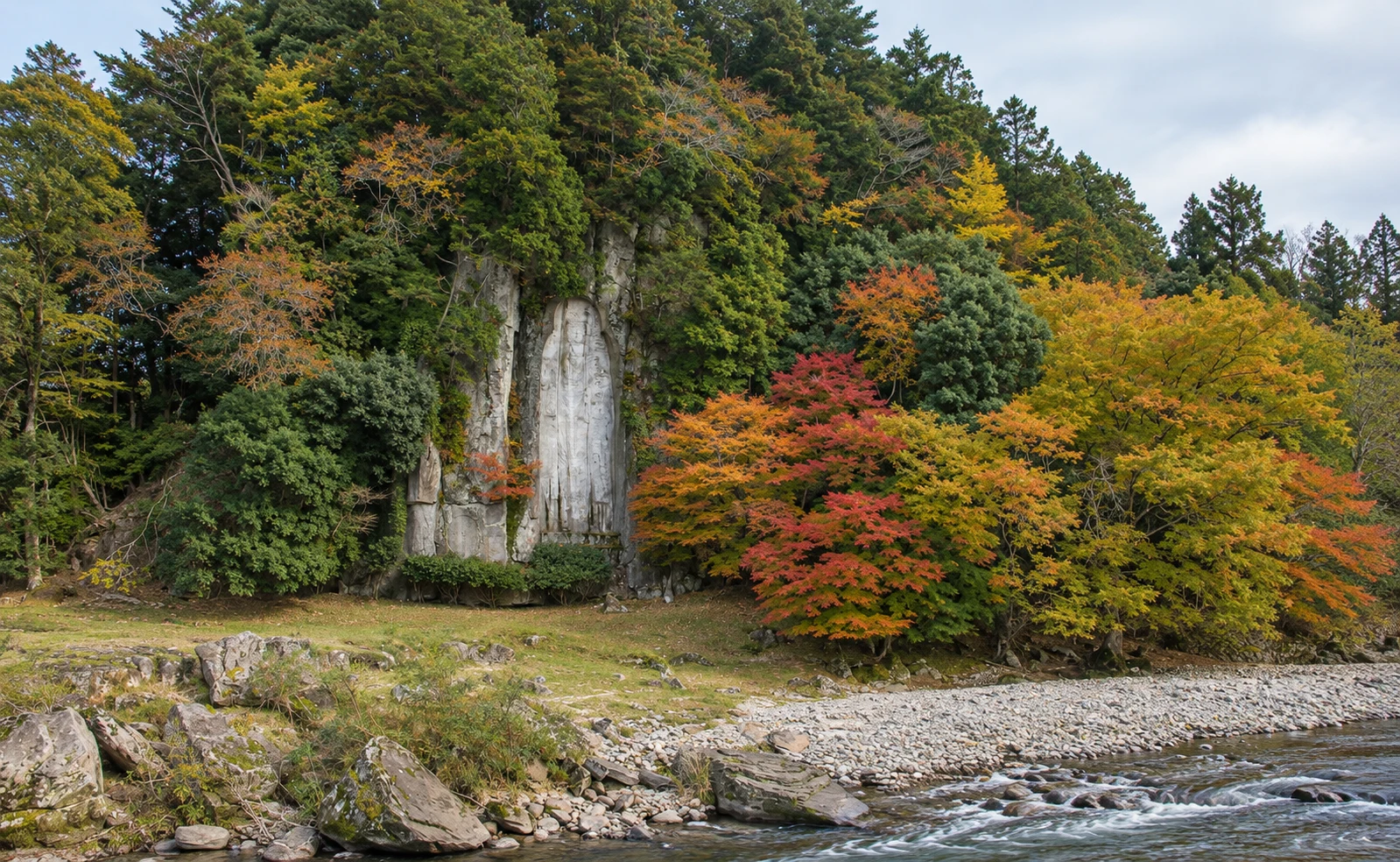 AI-generated visual study · not a documentary photograph
Discover Ohnoji Temple and the Miroku Cliff Carving
Ohnoji faces its best-known sacred image from across the Uda River. The temple calls itself a western spiritual gateway to Murouji, and its dedicated prayer place frames the line-engraved figure of Miroku on the opposite rock face. The carving began in the early thirteenth century according to temple and Uda City accounts; the temple also holds a hidden wooden Miroku image, a substitute-Jizo tradition and old weeping cherries. Its 2026 official website provides clearer visitor conditions than older directory summaries, especially for winter opening and what can be seen inside.
Look across the river, not for a cave entrance
The Miroku is carved on a cliff across the Uda River, not inside the main hall. The temple's prayer place lets visitors face it from the near bank. The operator gives about 11.5 metres for the figure including its lotus pedestal; Uda City's nationally designated Historic Site record gives roughly 14 metres for the full stone monument. These figures describe different extents. A prefectural English directory's much smaller '4m' figure is inconsistent with both primary accounts, so this guide does not repeat it.
Distinguish recorded building history from founding legend
Temple tradition says En no Ozunu founded the predecessor in 681 and that Kukai later defined it as Murouji's western gate. These are temple histories, not independently verified dates for the extant buildings. For the cliff Miroku, the operator gives 1207 while Uda City's Historic Site record gives 1209. Both place it in the early Kamakura period; the two-year difference is unresolved in the current sources. The relationship between the stone image and the temple's prayer terrace is easier to read on site than a claim about a single founding moment.
Explore the hall with realistic expectations
The temple lists a hidden principal Miroku image, an eleven-faced Kannon and a Jizo known through a tale of taking a servant's place at an execution. A life-size rubbing of the cliff Miroku's face is described in the hall. The principal image is ordinarily not displayed, and the operator says hall access can vary with open days, services and events. Older material mentions a smaller Fudo cliff carving, but current visitor access is not established in the pages checked; ask before planning around it.
See the cherries as living trees
Ohnoji's old weeping cherry is receiving arborist care. The temple now presents the ageing parent and a younger tree called Koito together, with other spring blossoms along the grounds. Their flowering depends on weather and tree health. The city's older account of two ancient trees and the temple's newer account of a recovering parent should not be collapsed into a guaranteed full canopy or a fixed festival date.
Use the current temple entry information
The temple lists ordinary entry 9:00–17:00 and winter entry from November through March 9:00–16:00. Admission at the gate is ¥300, with junior-high students and younger free. Its own access page gives roughly seven minutes on foot from Kintetsu Murouguchi-Ono Station; an older tourism page says five. The temple notes that spring events and ceremonies can change entry or parking and that reception may be unattended. Check its notices before a distant trip.
What to look for
Miroku cliff carving viewed across the Uda River
Hidden principal image and the substitute-Jizo tradition
Parent-and-young Koito weeping cherries in spring
Photo notes
Temple photographs are not licensed for MyNara. The operator asks visitors to follow signs and staff direction for photography and entry in the hall. Keep worshippers out of images without consent, do not cross the river or enter closed spaces for a closer angle, and seek temple approval for commercial filming.
Make a day of it
Explore guides close to this map point, then check the actual route before travelling. Distances below are straight lines, not walking distances or travel times; map points may not be entrances.
Sources & editorial status
Original MyNara draft based on the linked sources. Sources reviewed 20 October 2026. Opening arrangements, prices and offers may change; use the operator's current information before travelling.
- Ohnoji — current entry, fee, access and parking
- Ohnoji — Miroku carving and prayer place
- Ohnoji — hall access and hidden principal image
- Ohnoji — care of the parent and Koito cherries
- Uda City cultural properties — 1209 carving and full stone-image dimensions
- Nara Prefecture directory — older conflicting entry