Karako-Kagi Archaeological Museum: Life in a Yayoi Moat Village
See excavated pottery, tools, ritual objects and a model of a major Yayoi-period settlement at the museum devoted to nearby Karako-Kagi.
 Verified site photographs are being prepared.
Discover Karako-Kagi Archaeological Museum: Life in a Yayoi Moat Village
Karako-Kagi Archaeological Museum introduces the people who lived in one of the largest moat-enclosed settlements of the Yayoi period. The site spread across the central Nara Basin; its inner moat enclosed an area about 400 metres across, while the wider settlement covered roughly 42 hectares. The museum brings the archaeology into view through a 1:1,000 model, excavated objects and galleries that connect food, ritual, craft, exchange and conflict. Its collection also reaches beyond Karako-Kagi: the final room places the settlement among other regional sites and shows haniwa from nearby burial mounds. This is a compact museum to pair with the outdoor Karako-Kagi Historic Site Park, which is a separate place with its own opening times and access route.
Start with the model of a settlement, not a single monument
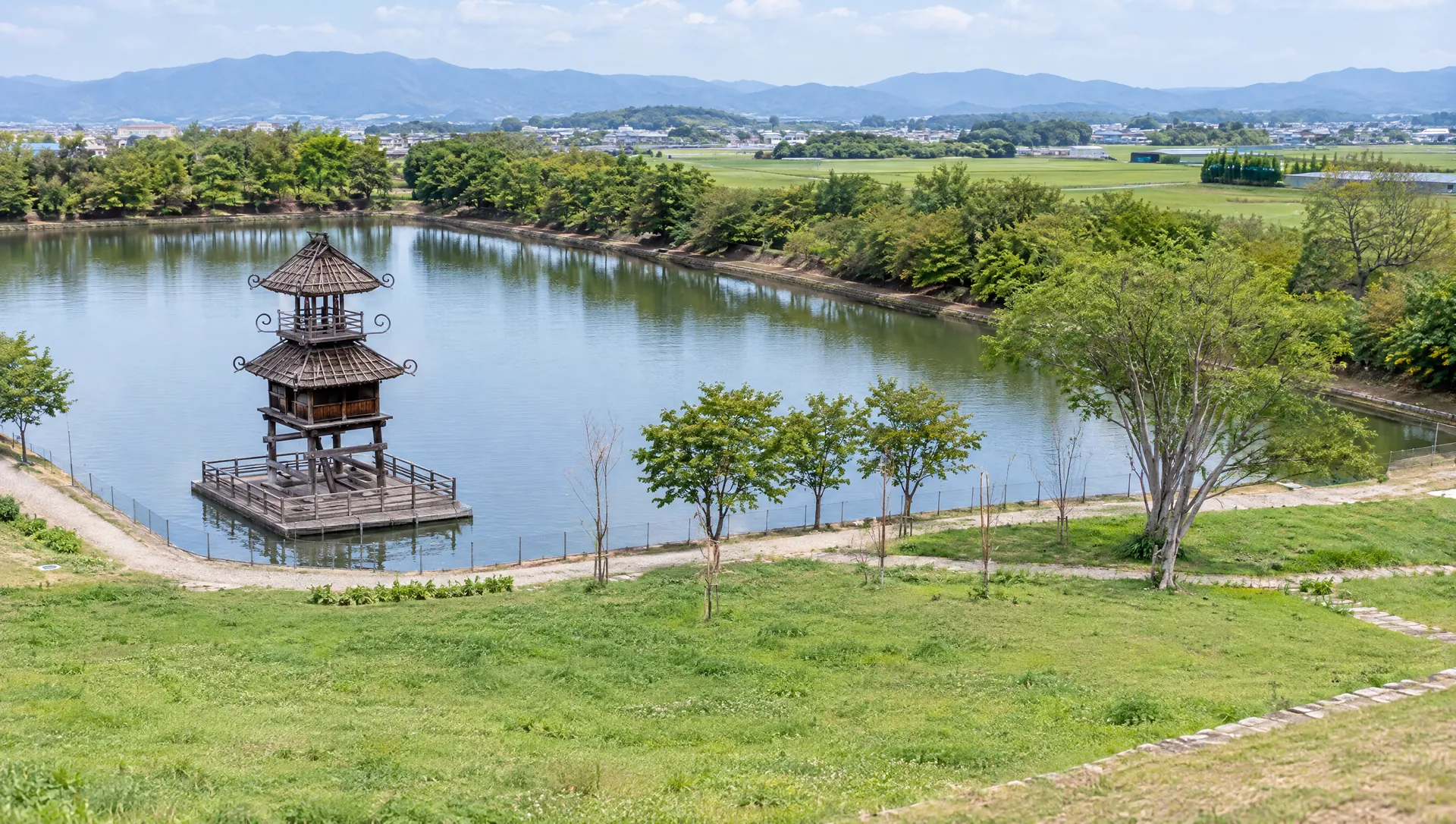
The first gallery presents the environment, food systems, ritual, exchange and conflict around Karako-Kagi. At its centre, a 1:1,000 model reconstructs the settlement at its height, including rice fields and burial grounds around the village. This helps explain why the site matters: a moat-enclosed community was a network of homes, work, food production and social relationships, not just a line of ditches. The town describes the surrounding landscape as the setting for a major settlement in the Yayoi period.
Look closely at craft, food and long-distance connections
The second gallery highlights the quality of objects made around 2,000 years ago: flowing-water patterns on Yayoi pottery, a realistic rooster-head-shaped clay object, a polished jade bead and a stone sword made from finely worked sanukite. Excavations have also found wooden tools and containers, rice remains, seeds, animal bones, ritual objects and a mould for casting a bronze bell. These objects point to farming, specialist production and connections beyond one village. They are archaeological evidence; avoid treating any single object as proof of a particular person or event without the museum's interpretation.
Connect Karako-Kagi to nearby sites and later burial culture
The third gallery widens the frame to nearby settlements, including the Makimuku site in Sakurai, and explains how Yayoi communities interacted across the region. It then turns to the burial mounds of Tawaramoto through haniwa excavated from local kofun. The town highlights a National Important Cultural Property ox-shaped haniwa from Hageda No. 1 Kofun and figurative pieces associated with Sasahokoyama No. 2 Kofun. This makes the museum a useful bridge between the Yayoi landscape and the later kofun heritage that travellers encounter elsewhere in Nara.
Pair the indoor galleries with the outdoor site carefully
The museum sits inside Tawaramoto Aogaki Lifelong Learning Center, about a 20-minute walk from Kintetsu Tawaramoto Station according to the town's access guide. The outdoor historic park is farther north at Karako 50-2; it is a separate site, around 1.5 km on foot from Kintetsu Iwami Station according to the town. The museum and park are not one ticketed complex, and each has separate hours. The town's museum page also links a virtual museum, which lets visitors preview displays before travelling.
Check hours, admission and visitor support
The current town visitor guide lists 09:00–17:00 opening, with entry until 16:30, closure on Mondays (open on a public holiday Monday and closed the next weekday) and 28 December–4 January year-end closure. Admission is ¥200 for adults and ¥100 for high-school and university students; junior-high students and younger enter free. Groups of 20 or more have separate rates. The town also states that visitors presenting a disability certificate or Mirairo ID, plus one accompanying person, enter free; JAF and My Number Card holders can receive a discount, whose amount is not specified on this page. Special-exhibition charges may differ. Exhibition volunteers can guide visitors on request at reception; school and general groups should use the town's advance application process.
What to look for
A 1:1,000 model explains a moat-enclosed Yayoi settlement and its surrounding landscape
Important archaeological finds include pottery, jade, stone tools and haniwa from local kofun
Separate from the outdoor historic park; about a 20-minute walk from Kintetsu Tawaramoto Station
Photo notes
The museum's use guide directs requests for publication or lending of collection images through a formal permission process. No licence for MyNara to reproduce exhibit or operator images has been confirmed. Ask staff before photographing galleries, visitors or staff, and follow any no-flash or exhibit restrictions. Do not touch displayed objects or cross barriers for a closer photograph.
Make a day of it
Explore guides close to this map point, then check the actual route before travelling. Distances below are straight lines, not walking distances or travel times; map points may not be entrances.
Sources & editorial status
Original MyNara draft based on the linked sources. Sources reviewed 20 October 2026. Opening arrangements, prices and offers may change; use the operator's current information before travelling.
- Tawaramoto Town — current visitor hours, closure days, admission and group guidance
- Tawaramoto Town — three permanent gallery themes and representative archaeological finds
- Tawaramoto Town — museum access by train, walking route and station rental bicycles
- Tawaramoto Town — site area, excavation context and archaeological features of Karako-Kagi
- Nara Prefecture — current visitor summary and outdoor park access
- MapFan — approximate coordinate for the Aogaki Lifelong Learning Center building